
Buyers paid US$ 3.50/kg for Peruvian frozen passion fruit, US$ 2.72/kg for Ecuadorian

- 119 buyers in 24 countries took US$ 9.21 million of frozen passion fruit in 2026.
- Spanish Food Solutions led with US$ 1.78 million, all of it from Ecuador.
- The United States took 60% of the value, with 40 buyers at US$ 3.32/kg.
- Peruvian fruit averaged US$ 3.50/kg, Ecuadorian US$ 2.72/kg and Colombian US$ 3.04/kg.
- Organic fruit reached US$ 4.18/kg, against US$ 3.06/kg for conventional fruit.
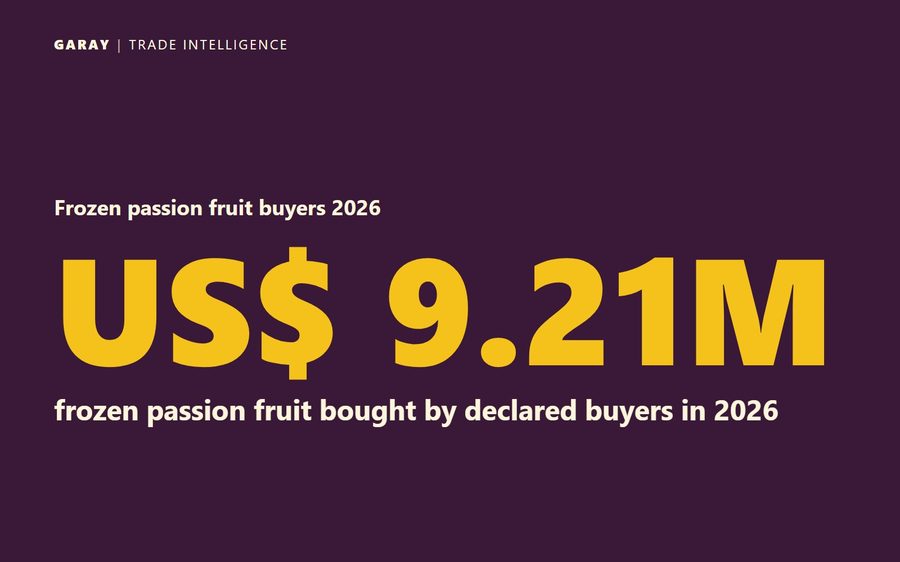
Frozen passion fruit reached 119 buyers in 24 countries in 2026, across 552 shipments worth US$ 9.21 million. The records come from SUNAT, Aduanas Ecuador, Aduanas Colombia and Aduanas México, and cover every shipment with a declared buyer from January to late October. The average price was US$ 3.17/kg.
I see the clearest opportunity for buyers in the gap between origins. Peruvian fruit averaged US$ 3.50/kg and Ecuadorian fruit US$ 2.72/kg, so a program that uses both can balance cost and supply through the year.
Who bought the most frozen passion fruit in 2026?
Spanish Food Solutions, in the United States, led with US$ 1.78 million, or 19% of the total. It took 96 shipments, all from Ecuador, at US$ 2.77/kg. It buys from Frozentropic, in Ecuador.
Pitaya Foods came second with US$ 1.07 million. It paid US$ 4.28/kg for Peruvian fruit from Mebol Gf and Agricola los Medanos. That was the higher price of the two buyers above US$ 1 million.
The next two places belong to companies that import from their own group. Fruexcol Us received US$ 781,200 from Fruexcol in Colombia, and Valley Fruit in Puerto Rico received US$ 708,087 from its Colombian side. Shipments inside a group made up 18% of the value, so their prices stay out of every average in this article.
Lamex Foods followed with US$ 399,490 at US$ 3.67/kg, and Ee and Brian Smith, in the United Kingdom, with US$ 351,790 at US$ 2.25/kg. Peruvian Import, also in the United States, spread US$ 280,932 across 26 shipments.
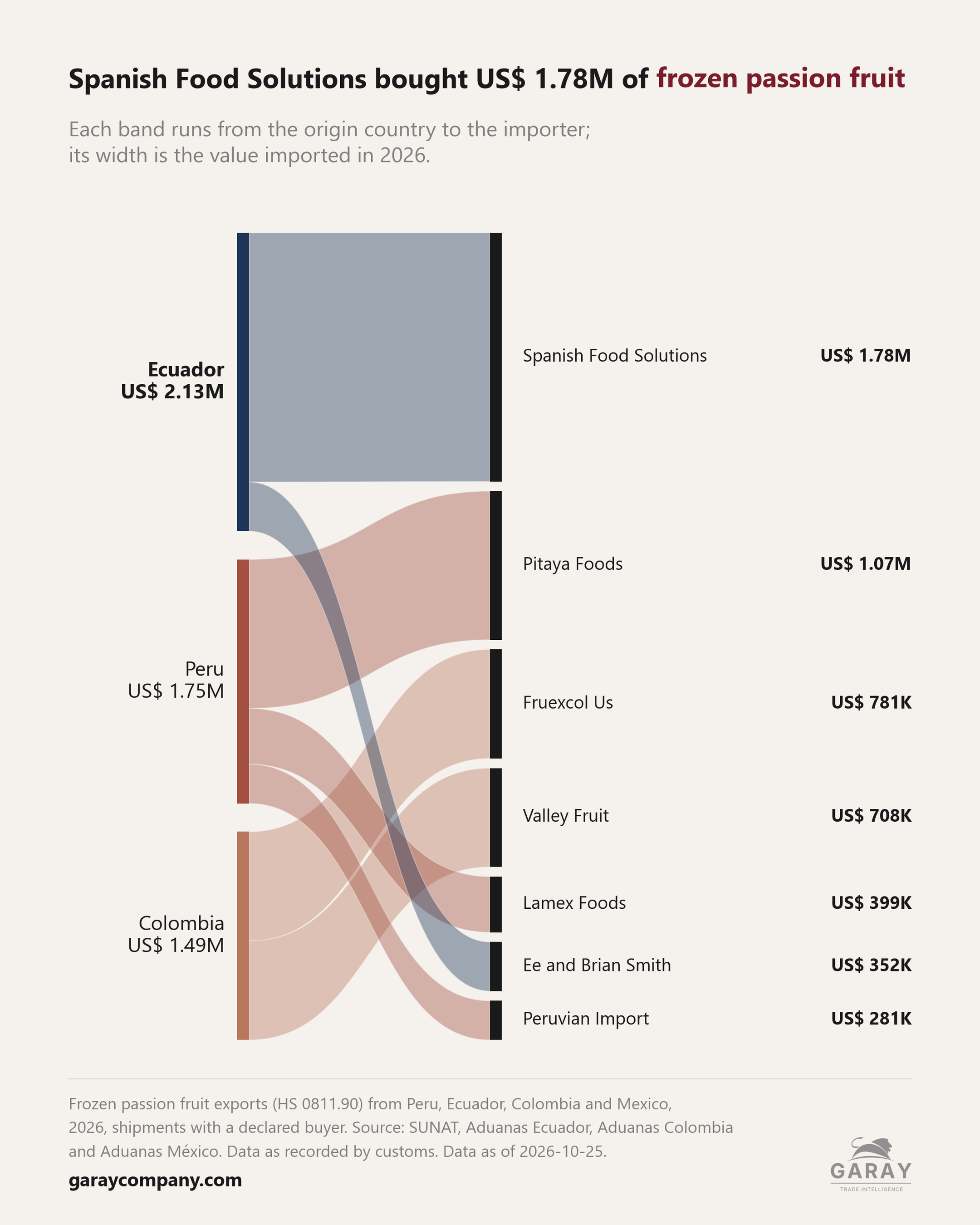
Each band runs from the origin country to the buyer; its width is the value of 2026.
The ten largest buyers held 64% of the value, and the top three held 39%. The other 109 buyers shared the rest, many with a handful of shipments each. Jp Trading Ang Global Imports, for example, placed 37 small orders worth US$ 185,697, 35 of them from Peru.
Where the buyers are
The United States took 60% of the value, with US$ 5.56 million and 40 buyers. Its importers paid US$ 3.32/kg and received fruit from all four origins.
Chile ranked second with US$ 1.23 million and 24 buyers, served by Peruvian suppliers in 91 of its 96 shipments. Mel Alimentos, Watts and Comercializadora Greenfarms led there. Watts paid US$ 3.88/kg, and Mel Alimentos US$ 3.28/kg.
Spain had 16 buyers and US$ 451,607 at US$ 3.20/kg, with 23 Peruvian and 23 Ecuadorian shipments. Delafruit, Naturandina and Ibero Express were its largest importers. The United Kingdom had three buyers, and they paid US$ 2.38/kg, well below the overall average.
Smaller markets add variety. In Hong Kong, Celeris Group and Asotec Corporacion took Colombian fruit at US$ 2.14/kg. Crops Fruits, in Belgium, paid US$ 3.74/kg for Peruvian fruit. In Uruguay, Industrias Alimentarias Cambay and Osan led four buyers that paid US$ 3.32/kg. Canada paid the top country average, US$ 5.95/kg, on small volumes led by Candesa.
Two smaller markets deserve a closer look. Guadeloupe counted three buyers, Caraibes Food Distribution, Comex Center and Ets Guy Lesueur, and they paid US$ 3.76/kg for Peruvian fruit. Argentina had four buyers at US$ 3.50/kg, with Biomac and Alif Agro as the largest. Both markets pay above the overall average and work with two suppliers each, which gives you a useful price reference if you compete for the same Peruvian fruit.
What buyers paid per kilo
Among the large buyers, the average price ran from US$ 2.25/kg to US$ 4.28/kg. The median shipment came in at US$ 3.15/kg, very close to the average, so the market price is easy to read.
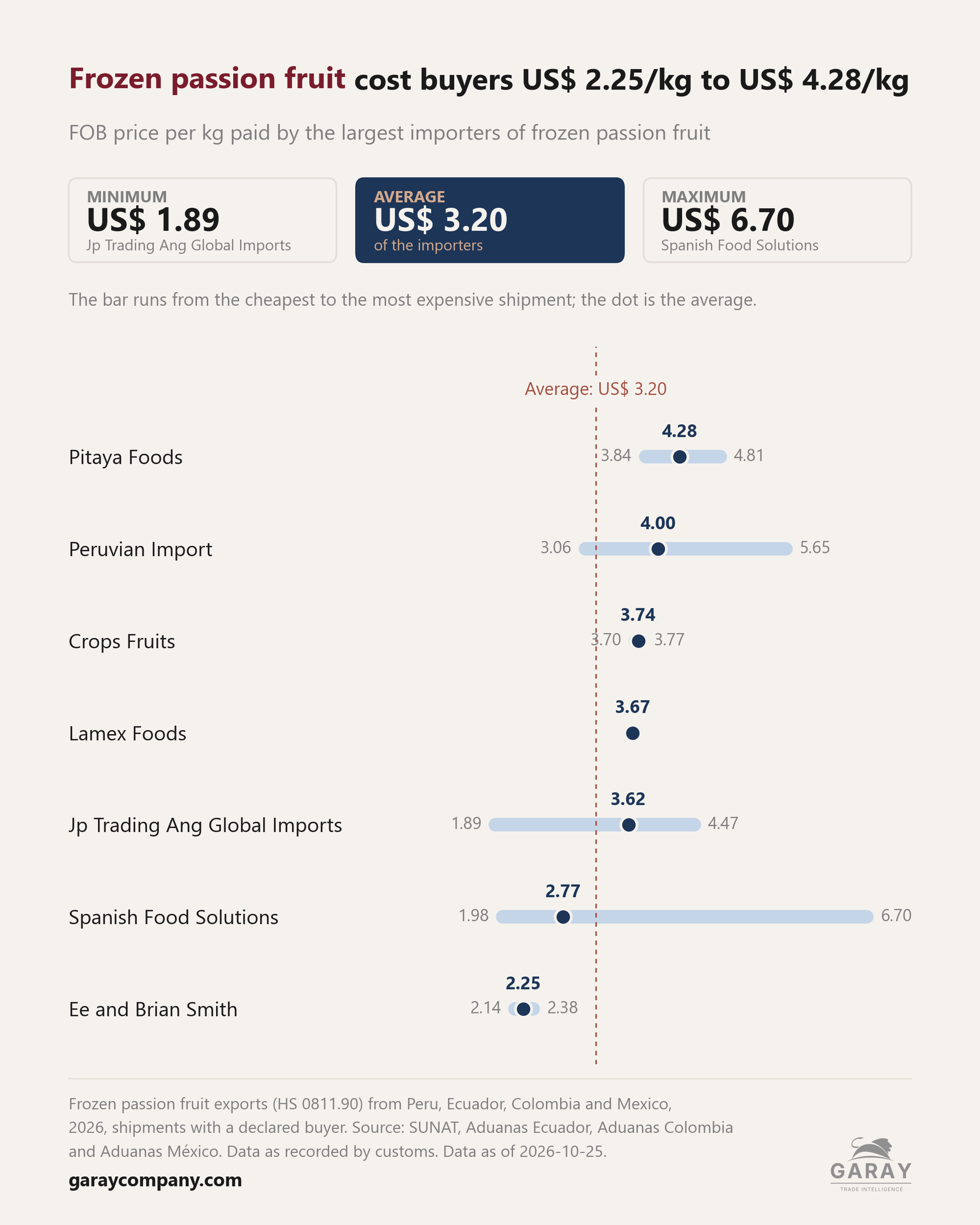
The bar runs from the cheapest to the most expensive shipment of each buyer; the dot is its average.
Jp Trading Ang Global Imports paid US$ 3.62/kg, Crops Fruits US$ 3.74/kg and Peruvian Import US$ 4.00/kg. All three buy from Peru. At the other end, Ee and Brian Smith and Spanish Food Solutions buy Ecuadorian fruit and paid less than US$ 2.80/kg.
Organic fruit carried a clear premium. Four buyers took organic frozen passion fruit at US$ 4.18/kg, against US$ 3.06/kg for conventional fruit. That gap of more than one dollar per kilo is worth checking before you sign an organic contract.
Which origin fits your program?
Peru supplied 52% of the value, with US$ 4.76 million and 79 buyers. Ecuador followed with 27% and 20 buyers, and Colombia with 21% and another 20 buyers. Mexico shows up with two buyers and US$ 4,186, too little to compare.
Each origin offers something different. Peru has the widest base of buyers and steady prices, with a monthly average between US$ 3.29/kg and US$ 3.65/kg from January to September. Ecuador was cheaper and just as steady, between US$ 2.58/kg and US$ 2.83/kg.
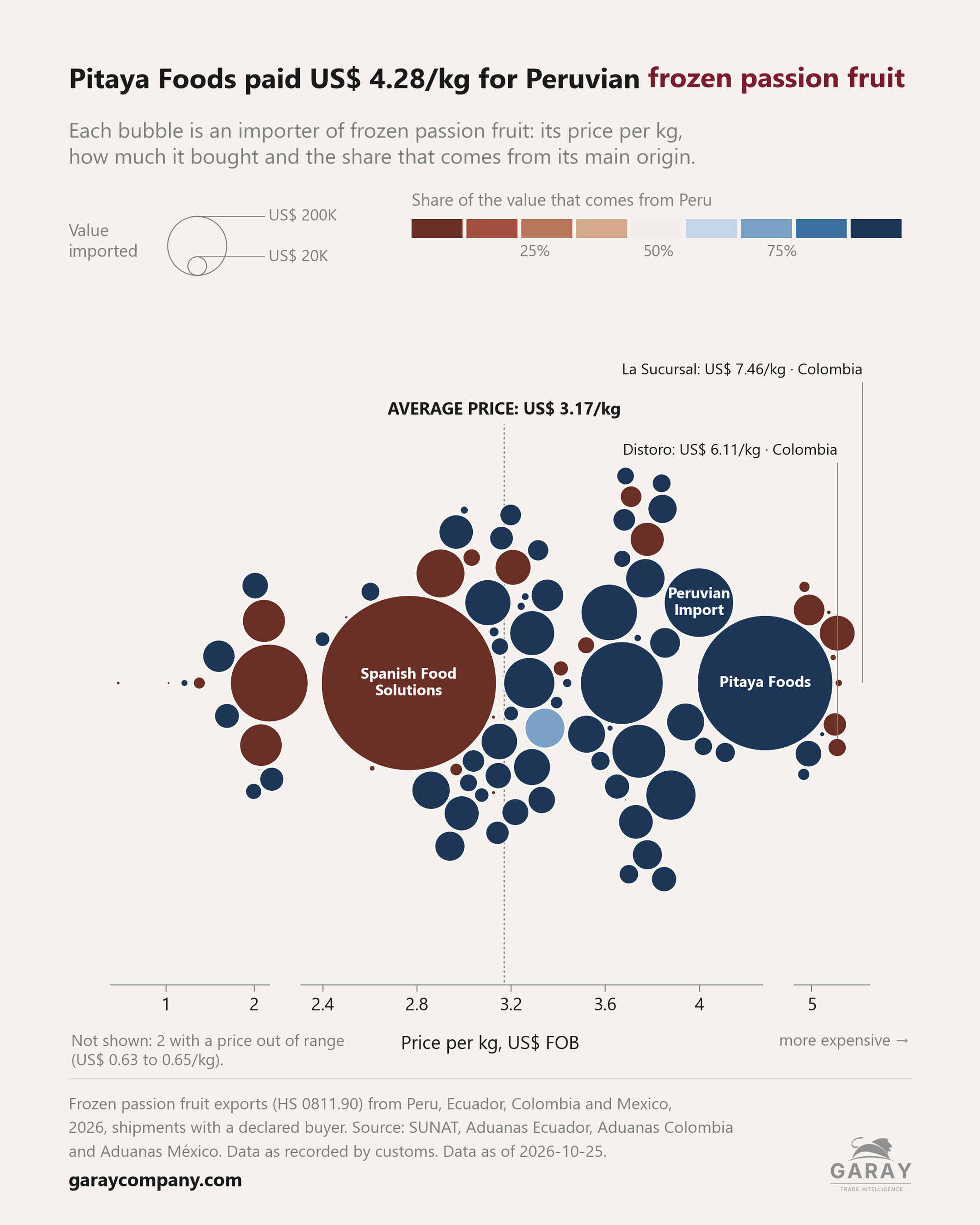
Buyers by price per kilo in 2026; the size of each bubble is the value it imported.
Colombia moved the most. Its monthly price went from US$ 6.11/kg in April to US$ 2.27/kg in June, then back to US$ 4.44/kg in August. If you buy Colombian fruit, fixing the price per contract protects you from that swing.
Only two buyers took fruit from two origins, and 110 of the 119 worked with a single supplier. That leaves room for a second supplier in 110 programs, and a second origin is the simplest way to compare quotes on equal terms.
Pulp, chunks or halves
Pulp is the main format in the records. 79 buyers took frozen passion fruit pulp, worth US$ 2.97 million at US$ 3.33/kg. Another 50 buyers left the format undeclared.
Chunks were rarer and dearer. Four buyers paid US$ 4.06/kg for them. Halves went to three buyers at US$ 3.42/kg, and two buyers took a mix of chunks and pulp at US$ 3.89/kg.
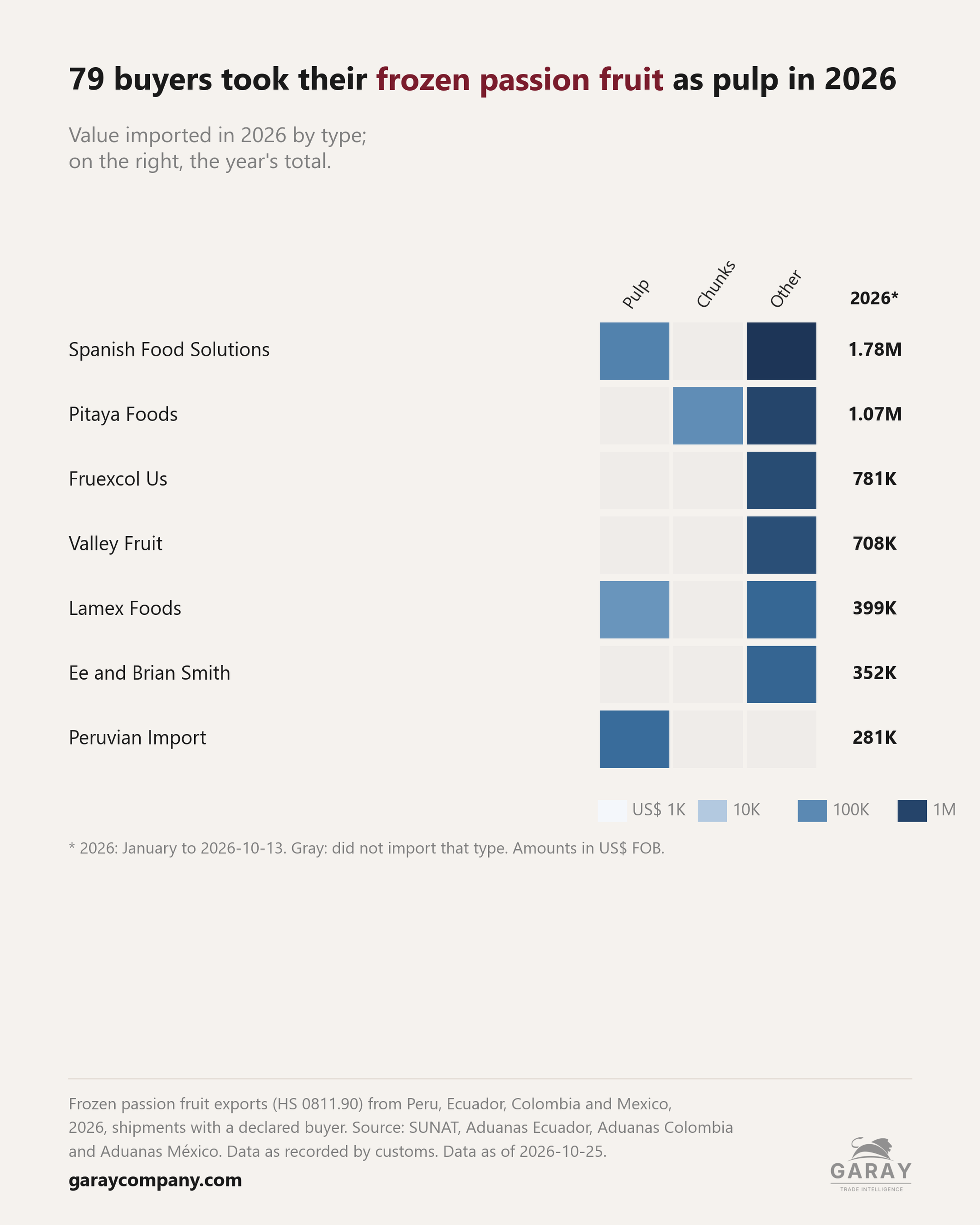
Buyers by declared format of frozen passion fruit in 2026.
So the format matters as much as the origin when you set two quotes side by side. A chunk price can look high next to a pulp price while it sits in line with what other buyers of chunks paid.
When buyers place their orders
Monthly value rose from US$ 0.50 million in January to a peak of US$ 1.42 million in June. July and August held near US$ 1.23 million each, and February to May stayed close to US$ 1.05 million a month.
June was also the heaviest month in volume, with 384 tonnes. Peru sent 219 of those tonnes, Ecuador 116 and Colombia 87. Ecuadorian volume reached its own high of 134 tonnes in September, the month Peruvian volume dropped to 50 tonnes.
That pattern helps with planning. A buyer who books Peruvian fruit before midyear meets suppliers with the most fruit on hand, and Ecuador can cover the last months of the year.
What this means for buyers
The market is small and concentrated, with 119 buyers and 64% of the value in ten hands. I still see the price gap between Peru and Ecuador as the main lever for a buyer this year. A program paying US$ 3.50/kg for Peruvian pulp can test Ecuadorian fruit near US$ 2.72/kg, or move part of its volume to organic fruit at US$ 4.18/kg with a clear label for its own customers.
The World Frozen Passion Fruit Buyers Radar lists all 119 buyers by name, with their country, shipments, price per kilo and the suppliers each one works with.
The 10 leading frozen passion fruit buyers in 2026
| Buyer | Country | Origin | Value 2026 (US$) | Price (US$/kg) |
|---|---|---|---|---|
| Spanish Food Solutions | United States | Ecuador | 1,782,413 | 2.77 |
| Pitaya Foods | United States | Peru | 1,065,379 | 4.28 |
| Fruexcol Us | United States | Colombia | 781,200 | - |
| Valley Fruit | Puerto Rico | Colombia | 708,087 | - |
| Lamex Foods | United States | Peru | 399,490 | 3.67 |
| Ee and Brian Smith | United Kingdom | Ecuador | 351,790 | 2.25 |
| Peruvian Import | United States | Peru | 280,932 | 4.00 |
| Jp Trading Ang Global Imports | United States | Peru, Colombia | 185,697 | 3.62 |
| Crops Fruits | Belgium | Peru | 168,498 | 3.74 |
| Mel Alimentos | Chile | Peru | 152,670 | 3.28 |
Every frozen passion fruit buyer, by name
The World Frozen Passion Fruit Buyers Radar covers 119 buyers in 24 countries and 552 shipments in 2026, with their price per kilo, origins and the suppliers each one works with.
See the buyersFrequently asked questions
Who are the leading frozen passion fruit buyers in 2026?
Spanish Food Solutions, in the United States, leads with US$ 1.78 million, followed by Pitaya Foods, Fruexcol Us, Valley Fruit and Lamex Foods.
Which country buys the most frozen passion fruit?
The United States, with 60% of the value in 2026, US$ 5.56 million and 40 buyers. Chile follows with US$ 1.23 million and 24 buyers.
Which origin is cheapest for frozen passion fruit?
Ecuador, at US$ 2.72/kg in 2026. Colombian fruit averaged US$ 3.04/kg and Peruvian fruit US$ 3.50/kg.
Does organic frozen passion fruit cost more?
Yes. Four buyers paid US$ 4.18/kg for organic fruit in 2026, against US$ 3.06/kg for conventional fruit.
Where does this data come from?
From the export records of SUNAT, Aduanas Ecuador, Aduanas Colombia and Aduanas México, from 1 January 2026 to 31 August (Colombia and Mexico), 20 October (Peru) and 25 October 2026 (Ecuador).